Cybersecurity Services in Dubai, UAE | Quest Middle East

Cybersecurity Services in Dubai, UAE

Protect the systems, accounts and information your business relies on. Quest Middle East provides cybersecurity services in Dubai and across the UAE, bringing prevention, monitoring, response and recovery into a practical plan for your organisation.

  • Built in Dubai for the world
  • Connected protection
  • Clear ownership
Contact Sales
Two colleagues reviewing a laptop during a cybersecurity planning discussion in Dubai

Security That Fits the Way Your Business Works

People work across offices, personal devices, cloud applications and supplier systems. A gap in one place can affect the rest of the business. Adding another security product helps only when someone configures it properly, watches the right signals and knows what to do next.

We help you choose a workable combination of cybersecurity services, based on your systems, business priorities and internal team. Start with a specific concern or build an ongoing managed security service with clear owners, agreed actions and reporting you can use.

Find the Right Cybersecurity Services for Your Business

Choose support for a specific gap or combine services around a shared operating plan. The areas below work together, with the detailed scope confirmed for your environment.

Managed SOC Services

Bring security alerts into a coordinated investigation and response process. Managed SOC services can connect SIEM monitoring and XDR or MDR workflows across the systems in scope. The focus is understanding which events matter, gathering context and escalating to the right people. We agree monitoring coverage, response authority and communication expectations so your team knows what happens after an alert, including the actions that need business approval.

Explore Managed SOC Services

Endpoint Security Services

Protect the laptops, desktops, servers and mobile devices used for everyday work. Endpoint security brings protection and detection together with patch management, mobile device management and data loss prevention where needed. We review your device mix, ownership and working patterns before defining policies. That helps balance protection with usability, including how staff access business information, how exceptions are handled and who follows up on a device that falls outside policy.

Explore Endpoint Security Services

Network Security Services

Control how people, devices and locations connect to business systems. Network security services can cover managed firewalls, intrusion detection and prevention, segmentation, secure remote access and network access control. Start with the connections your business needs, then review unnecessary exposure and access paths. We document ownership and change approvals so stronger controls remain understandable when staff, suppliers, guest devices or new sites need to connect.

Explore Network Security Services

Cloud Security Services

Review security across cloud workloads, internet-facing applications and user identities. This service area brings cloud posture and hardening together with web application security and identity and access management. Depending on your environment, the scope can include WAF controls, DDoS and bot protection, SSO, MFA and privileged access. We prioritise the exposures and permissions that matter to your workloads, while keeping application owners involved in changes that could affect normal operation.

Explore Cloud Security Services

Email Security Services

Reduce the risk of harmful messages and impersonation reaching your team or customers. Email security can cover phishing, business email compromise, malicious attachments, outbound controls and awareness. SPF, DKIM and DMARC help define how your domain is authenticated; domain and digital asset protection can address lookalike domains and fake profiles. We review the mail platform and legitimate senders before changing controls, with attention to both protection and the delivery of genuine business email.

Explore Email Security Services

Backup and Disaster Recovery Services

Make recovery a planned business process. Backup and disaster recovery services can cover servers, virtual machines and Microsoft 365, alongside recovery priorities, retention and restore testing. We help identify which services must return first and what data loss or interruption the business can tolerate. The agreed recovery objectives guide the design and drills, including storage location, dependencies and the people who approve a recovery when normal operations are disrupted.

Explore Backup and Disaster Recovery Services

Malware Removal Services

Address a compromised website or server with a defined investigation, cleanup and recovery scope. Malware removal may include checking persistence, reviewing affected files and services, and addressing the weaknesses that allowed the compromise. Server hardening and follow-up monitoring help reduce the chance of recurrence. We assess the situation before confirming turnaround, and explain dependencies such as backups, third-party warning reviews or application fixes rather than promising a universal instant recovery.

Explore Malware Removal Services
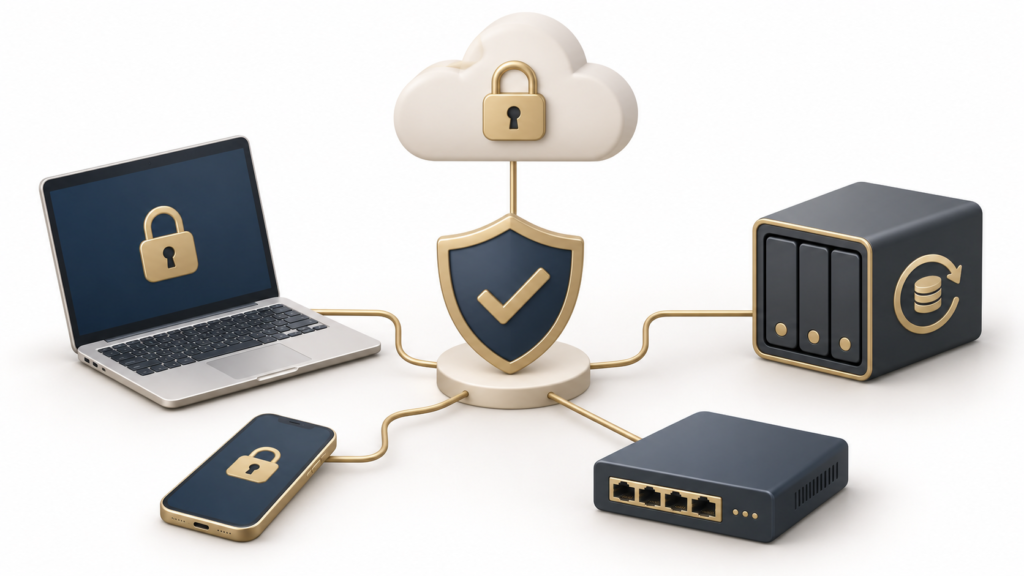
Illustration of connected endpoint, network, cloud and backup protection

Close the Gaps Between Your Security Tools

An endpoint alert, a suspicious email and an unusual sign-in may relate to the same incident. Separate tools need a shared process so the right team can connect the evidence and act within its authority.

We start with the information and services you need to protect, then review coverage, access and handovers. The result is an agreed responsibility map: what is watched, who investigates, who approves a change and where an issue goes next.

For availability and performance monitoring, connect the security plan with Managed Network Operations Center services. Operational monitoring and security response have distinct roles.

Managed Security Services With Clear Ownership

Choosing a managed security services provider (MSSP) means agreeing who will operate the controls after installation. Tools need regular attention as people, applications and threats change. Our managed security services are scoped around the assets and activities you want covered, with an operating process your team can understand.

Know What Is Covered

Record the users, devices, locations, cloud workloads and applications within the service. Identify the relevant tools, licensing and dependencies before agreeing the coverage.

Agree What Happens Next

Define how alerts are assessed, how incidents are prioritised and which actions are pre-approved. Set escalation contacts and communication expectations before an urgent decision is needed.

Keep Changes Accountable

Document important policy and configuration changes. Agree maintenance windows, exception handling and validation so protection develops alongside the business.

Review What Has Improved

Use service reviews to examine findings, unresolved risks and recurring issues. Give actions a clear owner and priority, rather than leaving a list of alerts without a next step.

A Practical Route From Your First Concern to Ongoing Protection

1. Understand Your Priorities

Tell us what you are worried about: suspicious email, unmanaged devices, cloud exposure, repeated incidents or recovery uncertainty. We map those concerns to the business services affected.

2. Review the Existing Setup

Examine the agreed systems, tools, access and ownership. Identify gaps and dependencies, then prioritise work based on business impact and the resources available.

3. Agree and Introduce Controls

Confirm the scope, responsibilities and acceptance checks. Plan changes with your team, test the important workflows and establish escalation before operational handover.

4. Operate, Report and Adjust

Monitor and maintain the agreed controls within the selected coverage. Use findings and service reviews to update priorities as systems, staff and working patterns change.

Security Planning With UAE Requirements in View

Your sector, operating location and the information you handle shape the security requirements that apply. We work with the control requirements confirmed by your compliance team, including UAE Information Assurance requirements often referred to as UAE IAS or NESA, DESC requirements, the UAE Personal Data Protection Law (PDPL), DIFC data protection requirements and sector expectations such as those for Central Bank-regulated organisations.

Turn Requirements Into Technical Work

Translate the agreed requirements into practical actions such as access controls, logging, endpoint policies, backup settings and incident procedures. Keep the system owner and compliance owner involved in the decisions.

Consider Data and Access Locations

Review where relevant information, security logs and backup copies are stored, who can access them and the supplier dependencies. In-country storage and retention are confirmed against the selected platform and proposal.

Keep Evidence as Part of the Process

Agree which operational records are needed, such as configuration changes, access reviews, incident tickets and recovery test results. Evidence should describe the controls actually operating in your environment.

Keep Accountability Clear

The service supports agreed technical controls and evidence. It does not provide legal advice, a formal compliance audit or certification, and it does not make every framework applicable to every business.

For context, see the official UAE data protection overview, DIFC data protection guidance and DESC standards and policies. Applicable obligations should be confirmed for your organisation.

Security Priorities Across Different Industries

The operating environment matters as much as the product selected. These are examples of the priorities we discuss when scoping cybersecurity services.

Finance and Professional Services

Protect client information, business email and privileged access. Define approval and evidence requirements around sensitive workflows and the requirements your organisation confirms.

Healthcare

Consider access to sensitive records and the availability of systems used in care. Coordinate device policies, supplier access and recovery planning with the teams that operate those systems.

Retail and E-commerce

Review online applications, employee accounts, payment-system boundaries and the risk of impersonation. Plan security changes around customer-facing services and trading activity.

Hospitality

Separate guest connectivity from business systems and review access across sites, suppliers and staff roles. Keep front-of-house operation in view when defining device and network controls.

Logistics and Warehousing

Consider branch connectivity, shared devices, supplier access and operational applications. Define workable controls and recovery priorities for time-sensitive processes.

Government and Public Services

Start with the requirements confirmed by the responsible authority and system owner. Map the agreed security work, access responsibilities and operational evidence to that context.

What You Should Be Able to Review

A security proposal should explain how the service will work. Before an ongoing engagement begins, we agree the documents and operating records relevant to its scope.

A Defined Service Scope

Covered assets, service activities, exclusions, licensing and supplier dependencies. Your team can see which responsibilities remain internal and which are assigned to Quest.

An Escalation and Approval Map

Named contacts, incident priorities, response coverage and actions requiring approval. Any response-time commitment is stated in the selected service agreement.

A Prioritised Action Plan

Findings connected to business impact, with an owner and next action. Where changes are proposed, include validation and rollback considerations appropriate to the system.

Useful Operational Reporting

An agreed review of activity, incidents, outstanding actions and relevant trends. The reporting format reflects the service delivered rather than unsupported headline performance claims.

Start With a Clear Scope, Then Choose the Right Coverage

You may need a focused improvement project, help integrating existing tools or an ongoing managed security arrangement. We scope the work around the users, endpoints, sites, platforms and responsibilities involved.

Pricing depends on that scope, licence requirements and operating coverage. Tell us about your environment and priorities for a tailored proposal. Existing platforms are reviewed before recommendations; product compatibility and any vendor-specific delivery arrangements are confirmed during discovery.

Discuss Your Security Requirements

Managed Cloud Services

Coordinate security controls with the way cloud resources are operated and maintained. Explore Managed Cloud Services in Dubai, UAE.

DevOps Services

Bring application delivery and infrastructure changes into the discussion when a security improvement affects deployment. Explore DevOps Services.

Managed NOC Services

Connect infrastructure availability and performance findings with the appropriate security handover. Explore Managed NOC Services.

Server Management Services

Maintain the operating systems and services behind your applications alongside the agreed security work. Explore Server Management Services.

Cybersecurity Services: Your Questions Answered

What do cybersecurity services include?

Cybersecurity services can include security monitoring, device protection, network controls, cloud and identity security, email protection, recovery planning and incident cleanup. The useful starting point is your business risk: which systems matter, what is already protected and where responsibility is unclear.

Do you provide cybersecurity services in Dubai and across the UAE?

Quest Middle East scopes cybersecurity services for businesses in Dubai and across the UAE. Share your locations, cloud platforms, approximate user and device counts, and the concern you want to address. We confirm compatibility, delivery arrangements and service boundaries before proposing work.

What are managed security services?

Managed security services provide ongoing operation of agreed security controls, with defined monitoring, escalation, maintenance and reporting responsibilities. The scope should identify covered assets, support hours, response commitments and actions that require your approval.

Can you work with our existing IT team and security tools?

Yes. We review the tools, licences, access and processes already in place before recommending changes. Your internal team, application developers and other suppliers can retain their responsibilities, with a documented handover when an issue crosses those boundaries.

Is a NOC the same as a SOC?

No. A Network Operations Center focuses on availability and performance. A Security Operations Center investigates potential threats and coordinates security response. They may need to work together, but monitoring an outage does not replace security detection and investigation.

Does your service make us compliant with UAE regulations?

Security controls can support your organisation’s regulatory obligations, but buying a service does not itself establish compliance. We can align agreed technical work and evidence with requirements confirmed by your compliance team. Legal interpretation, formal audit and certification are separate activities.

How much do cybersecurity services cost?

Cost depends on users, endpoints, sites, cloud workloads, existing licences, integrations and the required operating coverage. A focused improvement project and an ongoing managed service have different scopes. We provide a tailored proposal that explains inclusions, dependencies and recurring costs.

What should we do if we suspect an incident?

Use your established incident escalation route and involve the person responsible for IT or security. Preserve relevant information and avoid uncoordinated changes that could disrupt investigation. For a new enquiry, contact Quest to discuss availability and scope; the website form is not an emergency response channel.


Get in touch

Tell us what you want to protect, the main concern you want to address and which security tools you already use. Include approximate user, device and location counts so we can discuss a suitable scope. Please do not include passwords, access keys or sensitive incident evidence.

© 2026 Quest Middle East. All Rights Reserved.