
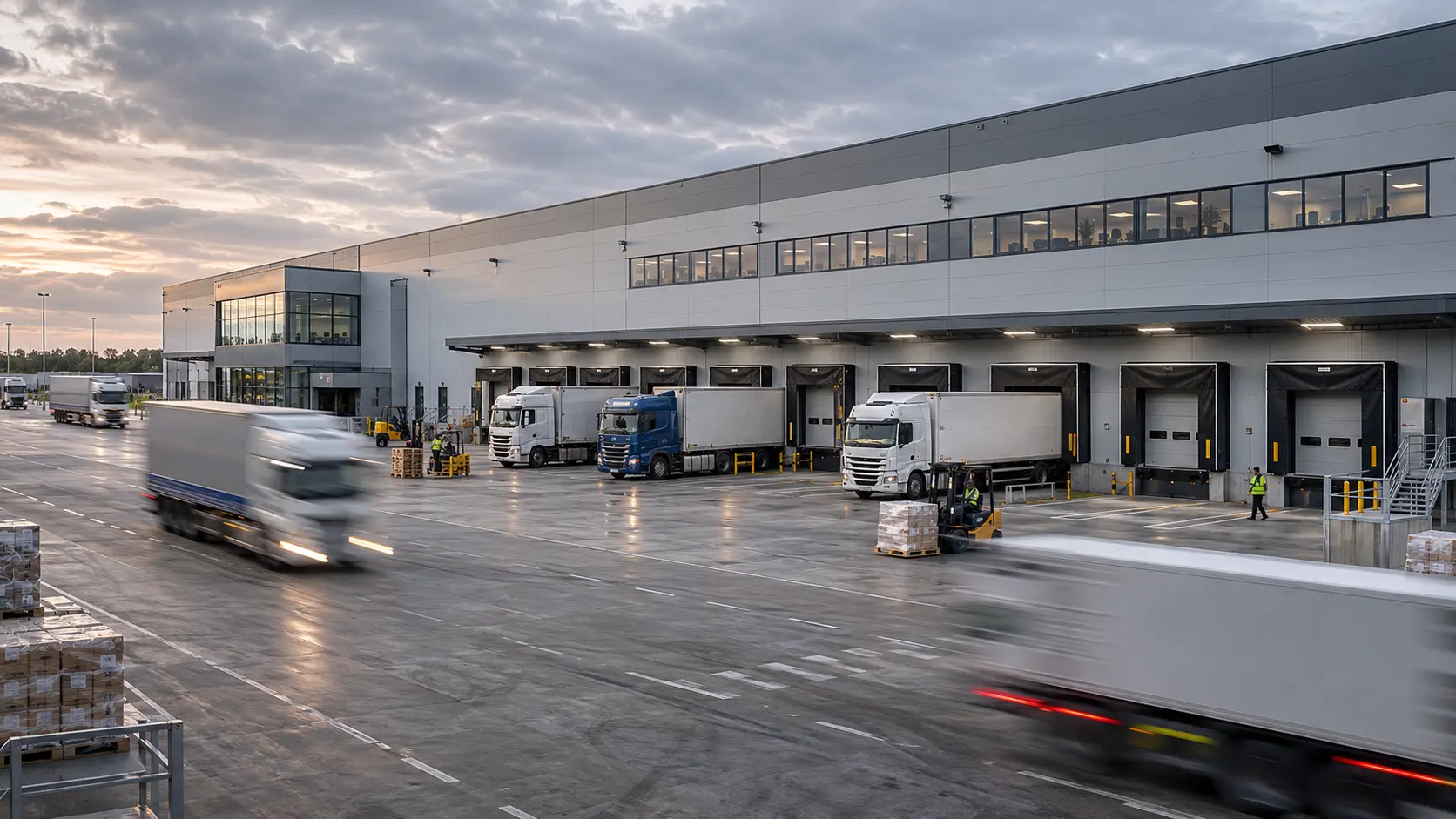
You all know that the world functions with immense help from logistics every day. Without trucks, the world as we know it today would come to a standstill. From agriculture to oil and gas, trucks play a huge role at multiple touchpoints of every industry, right from the procurement of raw materials and throughout the manufacturing process, to bringing the finished goods to the distributors and suppliers, and distributing them from the suppliers to the end customers. Trucks are an unavoidable player in the end-to-end logistics journey of a product.
At Quest Middle East, we have always been at the forefront of bringing innovative solutions to the problems the world faces. One such problem we have noticed in the logistics and transportation industry is truck turnaround: the time it takes for a truck to load and unload dictates the trucking company’s efficiency and also the dock owner’s output.
What Is Truck Turnaround Time?
Truck turnaround time (TAT) is the total time a truck spends at a facility, from the moment it arrives to the moment it leaves after loading or unloading. It is often called gate-to-gate time or on-site time. Warehouses, distribution centres, plants, fuel terminals and ports all use it to measure how efficiently they move trucks through their docks.
The basic calculation is simple:
Truck turnaround time = Gate-out time − Arrival time
For example, a truck that arrives at 08:10 and leaves at 10:25 has a turnaround time of 2 hours 15 minutes. To see how a site performs overall, operators track the average truck turnaround time: the total turnaround time of all trucks in a period, divided by the number of trucks.
A low truck turnaround time means trucks spend more hours on the road and fewer hours waiting. For the trucking company, that means more trips per truck per day. For the dock owner, it means more throughput from the same docks, staff and space.
The Stages That Make Up Truck Turnaround Time
Truck turnaround time is not one block of time. It is a chain of smaller stages, and a delay in any one of them adds to the total. A typical truck visit moves through six stages:
- Pre-gate waiting (queue time): the time a truck waits outside the facility before it is allowed in. This grows when many trucks arrive at once without a schedule.
- Gate check-in: security verifies the order number, driver, vehicle and documents before letting the truck in.
- Yard dwell time: the time the truck waits inside the yard or parking area until a dock becomes free.
- Dock time: the time at the dock itself, including positioning, loading or unloading, inspection and sealing.
- Documentation and release: delivery notes, weighbridge readings, quality checks and sign-offs.
- Gate check-out: the truck is verified at the exit and leaves the facility.
In many facilities, the actual loading or unloading is only one part of the total. Much of the rest is waiting: at the gate, in the yard or for paperwork. That waiting is exactly what good truck scheduling and dock management remove.
Types of Truck Turnaround Time
Not every truck visit is the same, so truck turnaround time is usually measured by category. Comparing like with like is the only way to set fair targets and spot real problems.
Inbound vs outbound turnaround
Inbound turnaround covers trucks delivering goods to your facility: raw materials, components or stock. Outbound turnaround covers trucks collecting finished goods for distribution. The two often have different bottlenecks. Inbound delays tend to come from receiving checks and putaway, while outbound delays tend to come from picking and staging.
Live loading vs drop-and-hook
In live loading or unloading, the driver and truck wait at the dock while the work happens. In drop-and-hook, the driver drops a full or empty trailer and leaves with another one. Live operations are far more sensitive to dock delays, because every minute of work is a minute the truck and driver stand idle.
On-site turnaround vs full trip cycle time
On-site turnaround is the gate-to-gate time at one facility. Full trip cycle time covers the whole round trip, from leaving the base to returning. A fuel tanker making several deliveries a day is a good example: a long wait at the loading terminal cuts the number of trips it can complete.
Scheduled vs unscheduled arrivals
Scheduled trucks arrive in a booked appointment slot. Unscheduled trucks simply turn up and join the queue. Tracking these separately shows how much truck scheduling is helping, and how much time walk-in arrivals add to the total.
Key Truck Turnaround and Truck Scheduling Terms
These are the terms you will hear most often when working on truck turnaround time.
| Term | What it means |
|---|---|
| Gate-in / gate-out | The recorded times a truck enters and leaves the facility. They are the start and end points of on-site turnaround. |
| Dwell time | The time a truck or trailer sits at a facility, especially time spent waiting rather than being worked on. |
| Dock time | The time a truck spends at the dock door while it is being loaded or unloaded. |
| Truck scheduling | Planning when each truck should arrive, usually by booking it into a time slot. |
| Dock appointment | A reserved time slot at a specific dock for a specific truck or order. |
| Dock assignment | Matching an arriving truck to the dock that will handle it. |
| Dock utilisation | The share of available dock hours spent actively loading or unloading. |
| Throughput | The number of trucks, orders or volume a facility handles in a day or shift. |
| Detention | A charge carriers bill when their truck is held at a facility beyond the agreed free time. |
| Demurrage | A charge for holding containers or equipment beyond the free time allowed, common at ports and terminals. |
| Yard management | Controlling where trucks and trailers park and move inside the facility’s yard. |
| Dock management system | Software that schedules trucks, manages check-in and check-out, assigns docks and records every timestamp. |
Why Truck Turnaround Tracking Is So Difficult
Truck turnaround tracking, however, has a huge issue. It is not easy to track how much time it takes for a truck to load or unload because, until now, the processes in place have been manual. This means somebody has to manually note down on paper the time it takes for a truck to load or unload, or to travel to particular destinations.
Case Study: The Truck Scheduling Problem at Shell, Jebel Ali Free Zone
We saw this firsthand in the oil and gas industry in the UAE. Since then, we have worked towards achieving the goal of fully managing the end-to-end dock operations of an oil supply facility in Jebel Ali Free Zone. We deployed a dock management system for Shell in Jebel Ali Free Zone to solve this exact issue.
Prior to this, the truck drivers didn’t know when to come to the dock or where to park. This was a huge issue, considering Jebel Ali Free Zone will fine the truck drivers if they are seen parking outside the warehouse. How would they know when it was their time to load or unload?
How Entry2Exit Automated Truck Check-In, Check-Out and Truck Scheduling
Now, that’s where we built the solution around a simple tablet, which is handled by a security guard at the gate who checks in each truck by matching its order number with the logs. If the order number exists in the logs, the truck is checked in. After it finishes loading or unloading, it is checked out on its way out. The time it took for the truck to finish the process is also logged into the system.
Now, how did the driver know when to proceed to the dock or the gate? All of that is controlled through a clever SMS notification system, right from the Entry2Exit dock management system. When a truck is checked out, the security guard can call the next truck by simply tapping on the screen. Whenever a dock is open for loading or unloading, that dock can be matched with the particular truck that is coming next.
This process elevated the transportation capacity of Shell’s hub by 37%.
How to Reduce Truck Turnaround Time: A Practical Guide
Now, this is one such example. We have deployed similar dock management systems for many companies in different regions. By combining all the knowledge we have gained from these different projects, we would like to publish this practical guide on how any yard or dock operator or trucking company can efficiently manage their turnaround time.
1. Embrace Technology
Technology solutions like a dock management system enable dock or yard operators to keep track of the time it takes for every truck to load or unload. It can find problems and where those problems occur. You’ll be able to pinpoint whether the problem is with your process, your docking station, your staff or the truck driver. You’ll be able to identify the exact bottleneck where you are wasting time. You’ll be able to track the time per dock across all your branches. This opens up a new plethora of data that you could not have had before. With this data, you can make decisions accordingly, which will improve your truck turnaround optimally.
2. Have Clear Communication
Most turnaround delays start with a missing piece of information. A driver who doesn’t know their slot either arrives early and waits, or arrives late and misses it. A dock team that doesn’t know what is coming next cannot prepare for it.
Clear communication means everyone works from the same live information:
- Drivers know when to come, which gate to use and which dock to go to.
- Gate staff know which trucks are expected and which orders they carry.
- Dock supervisors know which truck is next and what it is loading or unloading.
- Carriers and customers hear early when a slot changes.
Automated notifications, such as SMS alerts sent straight from the dock management system, replace phone calls and radio chatter. The driver gets the message at the right moment, and nobody has to chase anyone.
3. Use Truck Scheduling to Spread Arrivals
When every truck arrives first thing in the morning, queues are guaranteed. Truck scheduling spreads arrivals across the day by booking each truck into a time slot linked to its order. Slots should match your real dock capacity: the number of docks, the type of load and how long each job usually takes. Leave small buffers so that one late truck does not delay the whole day.
4. Prepare Loads and Paperwork Before the Truck Arrives
A truck should never wait for goods that could have been picked earlier. For outbound orders, pick and stage goods near the assigned dock before the slot begins. For inbound deliveries, confirm the purchase order and receiving space in advance. Prepare delivery notes and other documents digitally, so the truck is not held for paperwork after loading.
5. Match Staff and Equipment to Peak Demand
Turnaround data shows exactly when your busiest hours are. Use it to plan shifts, forklifts and loading crews around those peaks. A truck waiting at a free dock with no team to work it is one of the most avoidable delays.
6. Measure, Review and Improve Continuously
Set a baseline for your average truck turnaround time, then break it down by stage, dock, shift, carrier and site. Review the figures every week, fix the biggest bottleneck first and measure again. The most useful KPIs are:
- Average and maximum truck turnaround time
- Average queue and yard waiting time
- Dock time per load type
- Dock utilisation
- Share of trucks arriving within their scheduled slot
- Trucks handled per dock per day
Steps in Dock Management: How Truck Performance Is Tracked
A dock management system turns every truck visit into a series of recorded steps. Each step adds a timestamp, so the full truck turnaround time can be broken down and analysed. A typical flow looks like this:
- Booking and truck scheduling: the order is created and the truck is booked into an arrival slot. Recorded: order number, carrier, vehicle and slot.
- Pre-arrival notification: the driver receives an SMS with their slot and instructions. Recorded: when the driver was notified.
- Gate check-in: the security guard matches the truck’s order number against the logs and checks it in. Recorded: gate-in time.
- Waiting and call-forward: the truck waits in a permitted holding area until it is called. Recorded: waiting time before the dock.
- Dock assignment: as soon as a dock is free, it is matched to the next truck and the driver is called forward. Recorded: dock number and call time.
- Loading or unloading: the team works the truck at the dock. Recorded: dock start and finish times.
- Gate check-out: the truck is checked out at the exit. Recorded: gate-out time and total turnaround time.
- Reporting and analysis: the data flows into reports by dock, shift, carrier and branch.
With these timestamps in place, you no longer see just one total. You see exactly how long each truck waited at the gate, sat in the yard and spent at the dock. Slow docks, late carriers and understaffed shifts stand out immediately, and you can compare performance across all your sites.
Truck Turnaround Time Matters in Every Industry
Truck turnaround time is not just an oil and gas problem. Any facility where trucks load or unload faces it, and the same dock management principles apply everywhere.
Oil and gas, fuel and lubricants
Tankers and lubricant trucks queue at terminals and supply hubs, often with strict safety checks at the gate. As the Shell example shows, unclear truck scheduling can lead to fines for drivers parked outside the facility. Every hour saved at the terminal means more deliveries per tanker per day.
FMCG and retail distribution
Distribution centres send dozens of trucks a day to stores with tight delivery windows. A late departure can mean empty shelves at the other end. Scheduled dock slots and staged loads keep outbound trucks leaving on time.
Food, agriculture and cold chain
Fresh produce, dairy and frozen goods cannot wait. Refrigerated trucks that idle in a yard burn fuel and put the cargo at risk. Faster unloading protects both product quality and margins.
Manufacturing and automotive
Plants that run on just-in-time supply depend on inbound trucks being unloaded quickly. A slow dock can starve a production line of parts. Tracking inbound truck turnaround helps planners keep materials flowing.
Construction materials
Cement, steel and aggregate suppliers handle heavy, high-volume truck traffic, often through a weighbridge. Long queues at the gate cut the number of loads each truck can carry in a day.
Ports, freight forwarding and 3PL
Container trucks and third-party logistics warehouses serve many clients through the same docks. Detention and demurrage charges add up quickly when trucks or containers are held. Clear truck scheduling keeps shared docks fair and predictable.
Pharmaceuticals and healthcare
Medical supplies need careful documentation and temperature control. Digital check-in and timestamps also create the audit trail that regulators and customers expect.
E-commerce and parcel delivery
Parcel hubs face sharp peaks around events such as Ramadan and White Friday. Truck scheduling spreads arrivals across those peak days, so line-haul trucks are turned around without long queues.
The Real Cost of Poor Truck Turnaround Time
Poor truck turnaround time can quietly cost a single facility more than USD 700,000 a year. Delays rarely show up as one big bill. They are spread across driver wages for idle hours, fuel burned while waiting, detention charges, fines and trips that never happen.
Consider a simple example. Say one truck costs you USD 100 for every day it is delayed, and 20 trucks are delayed every day:
| Cost item | Amount |
|---|---|
| Cost of one delayed truck per day | USD 100 |
| Trucks delayed per day | 20 |
| Cost per day | USD 2,000 |
| Cost per month (30 days) | USD 60,000 |
| Cost per year (365 days) | USD 730,000 |
That is USD 730,000 lost every year, from just one site. Even on a six-day working week, it still comes to USD 624,000.
That is the cost you can save by investing just a fraction of it in a dock management system. The Quest Middle East dock management system, Entry2Exit, gives you truck scheduling, digital gate check-in and check-out, SMS driver notifications, dock assignment and turnaround reporting in one platform.
Frequently Asked Questions About Truck Turnaround Time
What is truck turnaround time?
Truck turnaround time is the total time a truck spends at a facility, from arrival to departure. It includes waiting at the gate, waiting in the yard, loading or unloading, and paperwork.
How do you calculate truck turnaround time?
Subtract the truck’s arrival time from its gate-out time. For a site-wide figure, add up the turnaround time of every truck in a period and divide by the number of trucks.
What is a good truck turnaround time?
There is no single number that suits every site. A fuel terminal, a cold store and a parcel hub all have different load types and checks. The best approach is to measure your own baseline, set targets by category and track the trend every week.
What causes long truck turnaround times?
The most common causes are trucks arriving all at once, manual check-in and paperwork, loads that are not ready, poor communication with drivers and too few staff at peak hours. Without data, these causes stay hidden.
How does truck scheduling reduce truck turnaround time?
Truck scheduling books each truck into a time slot that matches dock capacity. Arrivals are spread across the day, queues shrink, and dock teams know in advance what is coming.
What is the difference between dwell time and truck turnaround time?
Truck turnaround time covers the whole visit, from arrival to departure. Dwell time usually refers to the part of that visit where the truck sits waiting rather than being worked on.
Is a dock management system only for large facilities?
No. Any site where trucks queue, wait or miss their slots can benefit, whether it has two docks or fifty. The same system can then grow with you across multiple branches.
Start Reducing Your Truck Turnaround Time Today
Reducing truck turnaround time starts with seeing it clearly. Once every check-in, dock assignment and check-out is recorded, the bottlenecks become obvious and the fixes become simple. Truck scheduling, clear communication and a dock management system together turn waiting time back into moving time.
At Shell’s Jebel Ali hub, that approach increased transportation capacity by 37%. Your docks could be next. Talk to Quest Middle East to see how Entry2Exit can reduce truck turnaround time at your facility.
