DevOps Services in Dubai, UAE: CI/CD, Docker & Kubernetes

DevOps Services in Dubai, UAE

Release software with fewer manual steps, clearer checks and infrastructure that can grow with demand. Quest Middle East provides DevOps services in Dubai and across the UAE, covering CI/CD pipelines, Docker and Kubernetes, high availability and traffic management.

  • Built in Dubai for the world
  • CI/CD automation
  • Reliable deployments
Contact Sales
DevOps workstation with deployment and monitoring screens

Make Software Delivery Easier to Run

When deployments depend on a few people remembering the right commands, every release can become a stressful event. Differences between environments, unclear approvals and limited visibility make it harder to diagnose problems and recover quickly.

Our DevOps consulting starts with how your team works today. We help connect development and operations through repeatable delivery, documented infrastructure and useful feedback. You can begin with a single pipeline, a container project or a reliability review, then agree the next steps around your business priorities.

Where Is Your Delivery Process Getting Stuck?

Every Release Needs Manual Fixes

If deployment involves copying files, changing settings by hand or asking one person to run commands, begin with a repeatable release workflow. We map the steps and decide which checks and approvals belong in the pipeline.

Testing Works, Production Fails

Differences in configuration, dependencies or permissions can turn a successful test into a failed launch. We review those differences and establish a controlled way to manage environment-specific settings.

Traffic Spikes Slow the Application

If response times rise during busy periods, we investigate where requests are waiting. Load testing, capacity planning and appropriate scaling help address the constraint that affects your users.

Recovery Depends on Guesswork

If teams struggle to explain what changed or how to reverse it, we focus on release records, useful monitoring and tested recovery steps. People should know where to look and who can approve an action.

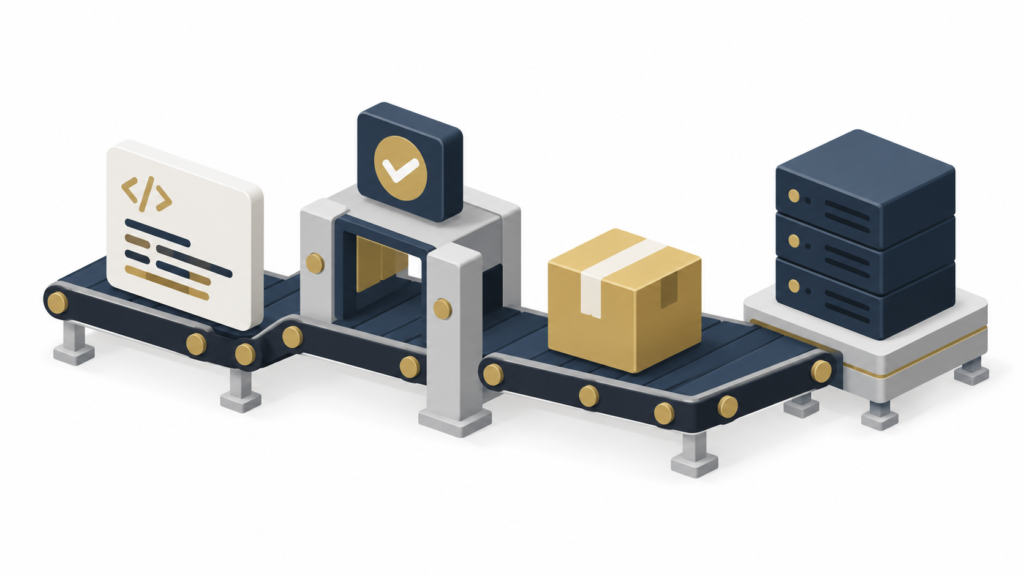
Illustration of code moving through testing, packaging and deployment

DevOps Consulting & CI/CD

Releases should follow a process your team can repeat. We review how code moves from a developer’s machine to production, identify manual handovers and design a pipeline around your application, approval process and existing tools.

Continuous integration helps check changes early through builds and automated tests. Continuous delivery prepares a tested release for deployment; production approval can remain with your team. We agree what must pass, who can approve a release and how to recover when a deployment does not behave as expected.

The work can include pipeline configuration, environment variables, access controls, build artefacts and release documentation. We start with one application or release path, validate it with your team and expand once the process is understood. You gain a clearer record of what changed and a more manageable route from development to production.

Discuss your requirements
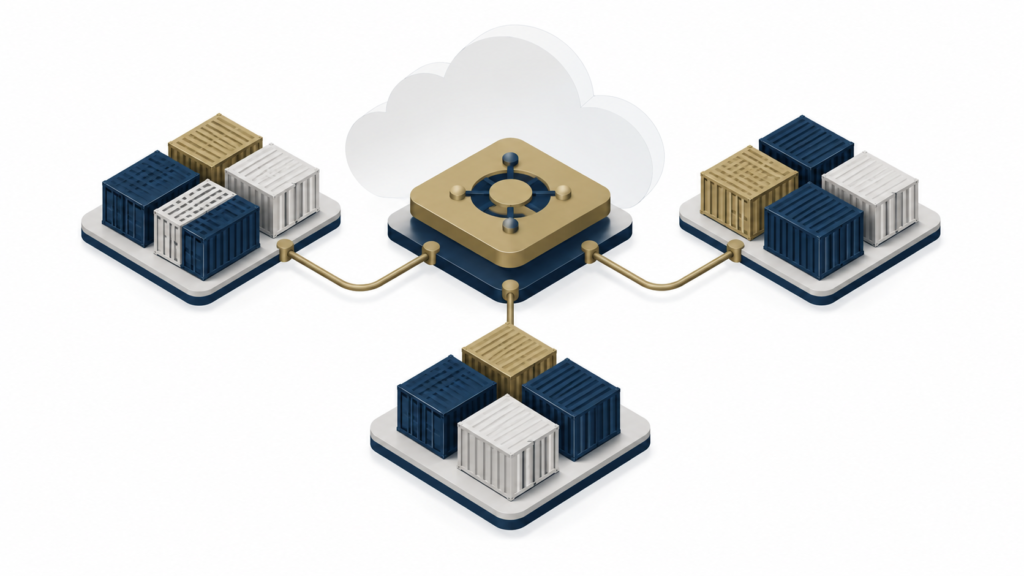
Application containers connected to a central orchestration hub

Docker & Kubernetes Containerisation

Containers help package an application and its dependencies consistently. Our Docker solutions focus on reliable builds, maintainable images and a documented way to run the application across development, testing and production.

For workloads that need orchestration, we can plan Kubernetes deployments, service connectivity, configuration, resource limits and health checks. We review persistent storage and application dependencies before deciding how a workload should be deployed. Kubernetes adds operational responsibilities, so the design needs to fit both the application and the people maintaining it.

Containerisation is not a requirement for every system. We assess whether a simpler deployment model would meet your needs and define image updates, registry access and operational ownership before handover. The result should make delivery easier to manage rather than introduce tools your team cannot support.

Discuss your requirements
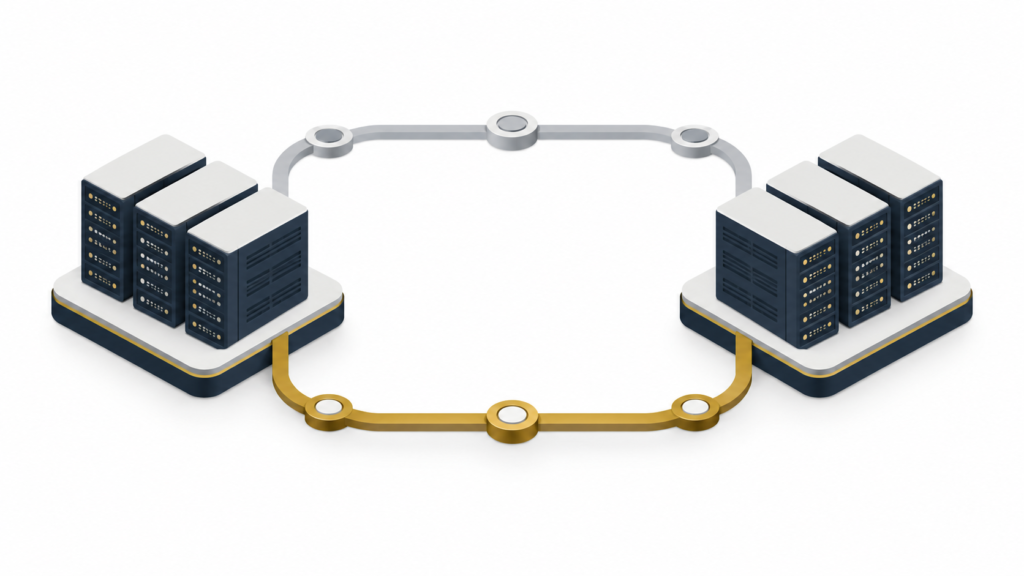
Two server clusters linked by primary and alternate connection paths

High Availability Clustering

A dependable application needs more than a second server. We review where failure could interrupt service, including application instances, databases, storage, networking and external dependencies. That review guides the high availability design.

The scope can include redundant application instances, load balancing, health checks and planned failover testing. Stateful components need particular attention: data consistency and recovery behaviour must be understood before traffic moves to another instance. We document what happens during a failure and which actions still need a person.

Availability targets are agreed against business requirements, platform capabilities and budget. We do not assume that clustering removes every interruption. Planned maintenance, failover exercises and clear operating instructions help your team understand the protection in place and its limits.

Discuss your requirements
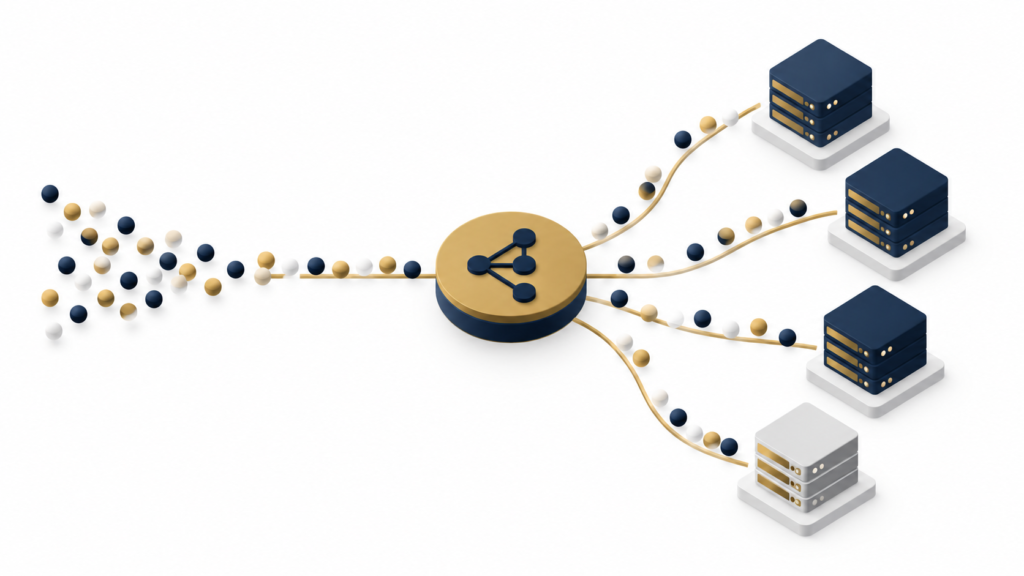
Incoming requests distributed across multiple application servers

High Traffic Management & Auto-Scaling

A campaign, new customer launch or busy trading period can expose a bottleneck that is invisible on an ordinary day. We review request patterns and the full application path so additional capacity is applied where it can make a difference.

High traffic management can combine load balancing, caching, application tuning and capacity planning. Where appropriate, auto-scaling can adjust application capacity using agreed demand signals and minimum and maximum limits. Database connections, slow dependencies and infrastructure quotas also need review; adding application instances alone may not resolve them.

We plan load tests around realistic journeys, review performance under pressure and agree scaling behaviour before rollout. Monitoring and cost controls help your team see the effect after a change. For broader spending reviews, our managed cloud services cover cloud cost optimisation.

Discuss your requirements

Build a Process Your Team Can Maintain

Infrastructure as Code

Version-controlled infrastructure makes proposed changes easier to review and repeat. Where it suits the environment, we can define provisioning and configuration workflows, review access to state and secrets, and document how changes are approved. The aim is less drift between environments and a clearer history of configuration decisions.

Testing and Release Checks

Agreeing what to test is as important as automating it. We work with your team to identify useful build checks, application tests and deployment validation. Release gates should catch meaningful problems while leaving a clear route for an authorised person to investigate failures.

Monitoring That Supports Decisions

Deployment logs, application errors and performance measurements help explain whether a release is healthy. We agree useful signals and escalation routes so the team can distinguish an isolated alert from an issue affecting users. Runbooks document the checks and recovery actions people need.

Access and Secrets Handling

Build systems often hold powerful permissions. We review who can change pipelines, approve production releases and access credentials. Secrets should be managed through an appropriate secure store with agreed access and rotation arrangements, rather than included in source code or copied between people.

Use Tools That Fit Your Environment

The right toolset depends on your repositories, hosting platform and team’s experience. During assessment, we review what you already use and confirm the integrations and versions within scope.

Pipelines and Automation

GitHub Actions, GitLab CI/CD, Jenkins or Azure Pipelines may be suitable for builds and release workflows. Terraform and Ansible can support infrastructure and configuration automation where they fit the operating model.

Containers and Visibility

Docker and Kubernetes can support packaging and orchestration. Prometheus, Grafana or an existing cloud monitoring service may provide the measurements your team needs. Tool selection is agreed during scoping, including licensing, hosting and maintenance responsibilities.

From Assessment to a Working Delivery Process

1. Review the Current Workflow

We map repositories, environments, dependencies and release responsibilities. Your team identifies the recurring problems, business-critical systems and practical constraints that should guide the work.

2. Agree the First Improvement

We define a bounded starting point and acceptance criteria. That might be an automated build, a repeatable deployment or a tested failover process. Scope, approvals and required access are agreed before implementation.

3. Implement and Validate

Changes are tested in an appropriate environment before production rollout. Your team reviews deployment results, monitoring and recovery steps. Maintenance windows and rollback arrangements are part of the plan.

4. Handover and Improve

We provide the agreed configuration and operating documentation, then walk through the process with your team. Follow-up work can use delivery time, release failures and recovery observations to prioritise improvements.

What Your Team Takes Away

The deliverables are agreed before the project begins. Depending on the scope, your team can receive the following practical assets, with a walkthrough of how to use and maintain them.

A Documented Release Workflow

Pipeline configuration, build and deployment steps, approval rules and validation checks give your team a repeatable route to production. The documentation explains where a release can stop and who decides what happens next.

Infrastructure and Environment Records

Architecture notes, configuration files and an environment inventory help people understand what runs where. Where infrastructure as code is included, changes can be reviewed through your agreed repository workflow.

Recovery Instructions

Runbooks explain how to investigate a failed deployment, when to roll back and who to contact. Validation records document the scenarios tested and any dependencies that still need attention.

A Prioritised Improvement Plan

Some changes can be delivered immediately; others need application work, budget or a maintenance window. A clear backlog records those decisions, their owners and the next steps.

See Whether Delivery Is Getting Better

Before changing the workflow, we agree what to measure and establish a starting point. The same application and comparable release types should be reviewed over time so the results are useful.

Time From Change to Release

Track how long an approved change waits for builds, tests, reviews and deployment. This helps identify the step slowing the whole process, rather than optimising a task that already runs quickly.

Release Reliability

Record which releases require a rollback, urgent fix or investigation. Review the causes alongside release size and test coverage so improvements address recurring problems.

Recovery After a Failed Release

Measure how long it takes to restore the affected service and which decisions delay recovery. Use those observations to refine monitoring, permissions and recovery instructions.

Application Behaviour Under Load

Review response times, errors and resource usage during representative traffic. Compare changes against the agreed service requirements and cost limits.

Targets are set around your business and the evidence available. These are measures for evaluating the work, not promised results or claims about previous clients.

Start With the Support You Need

DevOps Assessment

For teams deciding where to begin, a focused assessment identifies delivery bottlenecks, operational gaps and a practical sequence of improvements. The deliverables and systems covered are agreed at the start.

Implementation Project

For a defined requirement, we scope a pipeline, container platform, availability improvement or traffic-management project. Milestones and acceptance checks make the work easier to review.

Ongoing DevOps Support

For an evolving environment, ongoing support can cover agreed pipeline and infrastructure changes alongside your development team. Coverage hours, escalation arrangements and responsibility for application code are documented in the proposal.

Working With Your Developers

We can work alongside internal developers or an existing software supplier. Repository ownership, production approvals and handovers remain explicit, helping each team understand where its responsibility begins and ends.

DevOps Services: Your Questions Answered

What are DevOps services?

DevOps services help improve how software is built, tested, released and operated. A project may combine workflow consulting, delivery automation, containerisation, infrastructure configuration and monitoring. The scope depends on the application and the problems your team needs to solve.

Do we need Docker or Kubernetes to use DevOps?

No. A useful first step may be a repeatable build or deployment for an existing application. Docker and Kubernetes are considered when their benefits justify the operational work involved. We review the simplest suitable approach during assessment.

Can you improve our existing CI/CD pipeline?

Yes, an engagement can begin with the pipeline you already use. We review slow or unreliable steps, environment differences, access permissions and release checks, then agree changes. Replacing the entire toolset is not assumed.

Can an older application benefit from DevOps?

Often, parts of the build, configuration and release process can be improved without rewriting the application. Dependencies, unsupported components and manual steps may limit what can be automated. Assessment establishes what is practical and what requires application development.

Does high availability guarantee zero downtime?

No. Availability depends on the architecture, application behaviour, dependencies and operating processes. We agree suitable targets and validate failure scenarios within scope. A cluster also needs maintenance and clear recovery procedures.

How much do DevOps services in Dubai cost?

Pricing depends on the number of applications and environments, existing tooling, technical complexity and whether the engagement is an assessment, implementation or ongoing support. Share your current workflow and priorities so we can define a scope and prepare a proposal.

How do DevOps and managed cloud services work together?

DevOps focuses on software delivery and the infrastructure practices that support it. Managed cloud services cover agreed day-to-day cloud operations and resource management. They can work together, with responsibilities defined so release and infrastructure tasks have clear owners.

What do you need to prepare a proposal?

Tell us your application stack, repository and deployment tools, hosting environment and the issue you want to solve. Include any release deadlines and required support hours. Initial enquiries should not contain passwords, access tokens or confidential source code.


Explore Managed Cloud Services for operational management and cloud cost optimisation, Cloud Migration for a planned move, or our existing Clustering service for related infrastructure requirements.

Get in touch

Tell us how you deploy today and what you want to improve. Include your application stack, cloud platform and any release deadlines. We will discuss a practical starting point for your DevOps project.

© 2026 Quest Middle East. All Rights Reserved.